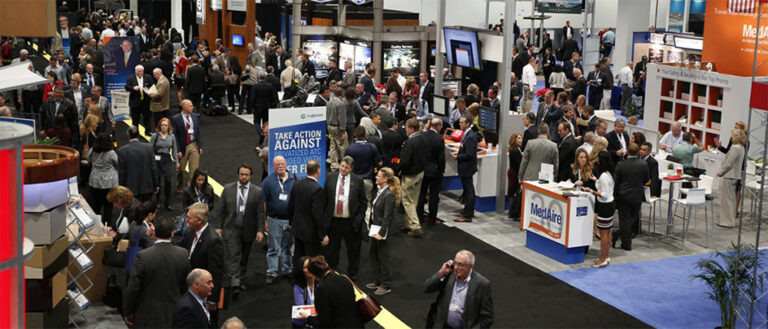
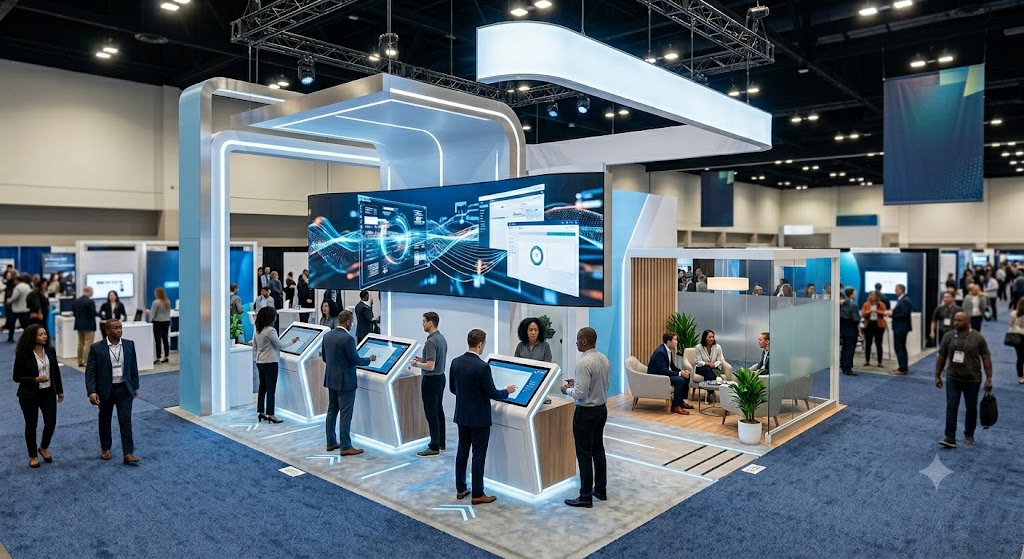
Trade show booth design for tech and SaaS companies works differently than booth design for most other industries. The audience is overwhelmingly technical, decision-makers come specifically to evaluate new products, and the booth has to demo software or hardware that doesn’t always lend itself to a 30-second pitch. The booths that win on tech show floors handle three things well: they make the product immediately visible, they create natural moments for hands-on engagement, and they leave room for the longer conversations that actually close deals. At Xibit Solutions, we’ve built booths for tech clients at CES, SEMA, Siggraph, and dozens of vertical shows since 2001, and the same design fundamentals apply whether the product is consumer electronics, B2B SaaS, or enterprise infrastructure.
This guide walks through the design principles, technology choices, and layout decisions that consistently produce results for tech and SaaS exhibitors.
Why trade shows still matter for tech and SaaS brands
Tech buyers are notoriously hard to reach through digital channels alone. Trade shows put them in a room where they actively want to evaluate vendors. According to industry research compiled by TSNN, 46% of trade show attendees are executives or upper management, 81% have buying authority, 92% attend specifically to see new products, and 99% of B2B marketers say trade shows offer value they can’t get from other channels.
For SaaS and enterprise tech in particular, the in-person evaluation matters. A buyer can read a comparison page, watch a demo video, and book a sales call without ever seeing the product run on real hardware in front of real people. Shows compress that entire evaluation cycle into a 20-minute conversation at your booth.
The investment behind the show floor is meaningful. The U.S. trade show industry reached approximately $15.8 billion in 2024, surpassing pre-pandemic levels. The booths next to yours represent real money behind real strategy, which means the bar for catching qualified attention is high.
What makes booth design different for tech and SaaS audiences
Most trade show audiences want to be charmed. Tech and SaaS audiences want to be convinced. They walk the floor with a mental checklist of features, integrations, security questions, and pricing concerns. Your booth has roughly three seconds to communicate three things: what you do, who you’re for, and why someone should slow down to learn more.
The challenge is that tech products are often invisible. A SaaS platform doesn’t sit on a pedestal. An API doesn’t glow. Cloud infrastructure doesn’t photograph well. So the booth has to make the abstract feel concrete, usually through screens, working demos, and physical metaphors that hint at what the software actually does.
A few audience expectations specific to tech buyers:
- They expect demos. A booth without working software running somewhere on a screen reads as either too early-stage or hiding something.
- They expect technical depth from booth staff. Polished pitches followed by “let me get an engineer” is a turn-off.
- They evaluate the booth as a proxy for the product. Sloppy booth signals sloppy code, in their minds.
Design principles that work for tech booths
Open island layouts that pull people in from any direction
Inline booths with two or three walls work for some industries. For tech, the math usually favors an open island layout that lets attendees enter from any aisle. CES 2025 design coverage from Event Marketer noted that across the show floor, booths used dancing installations, holograms, flip signage, movement in architecture, and soundscapes to catch and hold attention.
The reason is practical. Tech buyers walk the floor in groups, often arguing about which booths to skip. An open footprint reduces the friction of stepping in. A booth that requires picking a single entry point from a single aisle loses to one that absorbs traffic from any direction.
Headline messaging that reads from across the aisle
Most attendees decide whether to approach your booth before they’re close enough to read body copy. Your headline message, usually a positioning statement or core benefit, needs to be legible from roughly 30 feet away.
A few rules we apply:
- Mount the primary message high, not at eye level
- Keep it to seven words or fewer
- Avoid product names alone, since they mean nothing to people who don’t already know you
- Pair it with a visual that hints at what the product does
Demo zones that work for tech products
Tech and SaaS booths almost always need a demo area. The mistake we see most often is treating it as an afterthought, with a counter at the back, two laptops, and a tired sales rep clicking through screens.
A working demo zone has:
- A large screen visible from outside the booth so passersby can see the product running
- Proper lighting on the screen so it isn’t washed out by overhead venue lighting
- Audio handling that lets a demo work without shouting or whispering
- Seating or a defined standing position that signals “stop here and watch”
A separate conversation zone for serious leads
Tech sales conversations tend to be longer than the average trade show pitch. Booths that try to handle every interaction at the same counter end up with bottlenecks where prospects who are ready to talk seriously get stuck behind people who are still in browsing mode.
The fix is a separate, semi-private conversation area. Even a small lounge with a couch and two chairs changes how the booth functions. It signals that the booth supports longer, qualified conversations, and it gives your team a place to host them without interrupting the rest of the demo flow.
Technology integration that earns its keep
Tech and SaaS booths get judged on the tech inside the booth itself. Generic banners and folding tables read as ironic at best. The real question is which technologies actually earn back their cost.
Here’s how we think about the major options:
| Technology | Typical cost | What it does well |
| LED video walls | $500 to $10,000+ | Draws attention from across the floor, reusable across shows |
| AR/VR demos | $2,000 to $50,000+ | Shows complex products that don’t fit on a counter |
| Touchscreens and kiosks | $1,500 to $7,000 | Lets visitors self-explore, frees staff for hot leads |
| RFID/NFC lead capture | $3,000 to $12,000 | Hands-free badge scanning, real-time engagement data |
| Mobile app integration | $2,000 to $15,000+ | Gamification, scheduling, post-show follow-up |
| Live streaming setup | $500 to $5,000+ | Extends booth reach to remote audiences |
A few patterns we’ve seen across tech clients:
- LED video walls are usually the highest-leverage investment. Industry research consistently finds that nearly half of exhibitors rank visual impact as the single most effective traffic-builder, and a video wall handles that better than almost any other element.
- AR and VR work best when the product genuinely benefits from spatial visualization. A standard SaaS dashboard demo doesn’t need VR. A factory floor digital twin or a complex hardware product might.
- RFID lead capture is underrated. It removes the awkward “can I scan your badge” moment and produces cleaner data for sales follow-up.
- Avoid stacking too many technologies. A booth running AR, VR, three video walls, and a holographic display reads as a tech demo, not a product demo. Pick the two or three that actually serve the story.
Common mistakes tech and SaaS exhibitors make
A few patterns we see repeatedly across tech clients in their first few shows:
Hiding the product. The booth is well designed, the brand looks polished, and the product itself is buried in a back corner where attendees can’t see it from the aisle. If your software is the reason people are walking the show, it should be the most visible thing in the booth.
Generic positioning. “AI-powered platform for modern teams” describes about 4,000 booths at any given enterprise tech show. The booths that work make a specific claim that filters the audience. “Cut your data pipeline build time by 60%” tells the right people to stop and the wrong people to keep walking, which is exactly what a trade show booth should do.
Understaffing the demo. A booth with one demo station and one demo person can handle maybe six conversations an hour. Tech shows often produce 50 to 100 qualified prospects per day for a well-positioned booth. The math doesn’t work without multiple demo stations or staff trained to run parallel conversations.
Over-investing in the booth, under-investing in follow-up. The booth is one part of trade show ROI. The follow-up sequence that turns badge scans into pipeline matters at least as much. We’ve seen tech clients spend $200,000 on a booth and then send a single templated email two weeks after the show. Most leads have already cooled by then.
Choosing between custom, rental, and modular booth approaches
The right approach depends on how often you exhibit, how much your messaging changes between shows, and how much control you want over the design.
| Approach | Best for | Tradeoffs |
| Custom build | Companies exhibiting at flagship shows, brand-defining presence | Higher upfront cost, longer lead times, storage requirements |
| Custom rental | Companies wanting custom look without ownership | Slightly less flexibility, but no storage or refurb costs |
| Modular system | Companies exhibiting frequently with similar messaging | Lower per-show cost, faster setup, less design flexibility |
| Hybrid (modular plus custom elements) | Most tech and SaaS exhibitors | Balances cost, flexibility, and impact |
For most tech and SaaS companies running three to six shows a year, a hybrid approach makes sense. You get a modular structural base that travels efficiently, with custom graphics and feature elements that update based on the show and the messaging.
What a working tech booth looks like in practice
To make this concrete, here’s how the principles translate to a typical 20’x20′ island booth for a SaaS company at a major industry show. Examples of similar layouts can be found in our trade show booth gallery:
- A large overhead identifier with the company name and a one-line positioning statement, both legible from the main aisles
- An open footprint with no hard walls blocking entry from any direction
- A central LED video wall running a looping product demo at all times, even when no rep is actively presenting
- Two demo stations on opposite sides of the booth, each with a touchscreen and a presenter
- A small lounge area with two seats and a low table, set slightly back from the main floor
- A coffee or refreshment station that quietly increases dwell time without becoming the main attraction
- RFID badge readers integrated into the demo stations, so every interaction generates a clean lead record
- Storage built into the booth structure for collateral, swag, and rep gear
The total investment for a booth like this typically runs $80,000 to $200,000 for a custom build, or $30,000 to $80,000 for a custom rental. Costs vary based on materials, technology integration, and shipping distances.
Frequently asked questions
How early should we start designing a tech trade show booth?
For a custom build, start six to nine months before the show. For a custom rental, three to four months is usually enough. That timeline covers more than fabrication. You also need it to finalize messaging, build out the demo flow, and train staff before the booth ships.
How much should a tech or SaaS company budget for a trade show booth?
A 10’x10′ inline booth with basic graphics typically runs $5,000 to $15,000. A 20’x20′ island booth with technology integration usually runs $50,000 to $200,000 depending on whether it’s custom or rental, and how much LED, AR, or interactive technology is included. These numbers cover the booth itself, not shipping, drayage, labor, or show space rental.
Should we build for one specific show or design for multiple shows?
Most tech companies benefit from a base structure that adapts across shows, with modular graphics and features that change. Designing exclusively for one show usually wastes 60 to 80% of the booth investment.
What’s the biggest difference between a tech booth and a booth in another industry?
The audience expects hands-on interaction with the product. A tech booth without a working demo on display reads as suspicious. A consumer goods booth without a demo is normal. Plan accordingly.
Do we need AR or VR in our booth to look modern?
No. AR and VR are useful when the product genuinely benefits from spatial visualization. For most SaaS products, a great LED video wall and a clean touchscreen demo deliver more value per dollar than VR headsets that one person at a time can use.
Putting it together
The booths that work for tech and SaaS exhibitors share one quality: they respect the audience. Technical buyers come to evaluate products, they have limited time, and they want clarity, working demos, and a way to ask hard questions. Get the headline messaging legible from across the aisle, give the product a place to live where people can actually see it run, and create space for the longer conversations that lead to pipeline.
If you’re planning a tech or SaaS trade show booth and want to talk through the design, our team at Xibit Solutions has built booths for tech clients across most major U.S. shows over the past 20 years. Free consultations and estimates are available, and our in-house design and fabrication facility in North Las Vegas means we can usually move faster than competitors who outsource production. Reach out at info@xibitsolutions.com or (702) 361-7502 to start a conversation.