What to Expect When Exhibiting at San Diego Comic-Con 2026
San Diego Comic-Con 2026 runs July 23-26 at the San Diego Convention Center, with Preview Night on July 22, drawing approximately 135,000 attendees across four packed days. Exhibiting here means navigating sold-out booth space, strict union rules, complex drayage logistics, and one of the most competitive show floors in the country. At Xibit Solutions, we have built and managed booths for clients at major shows for over 20 years, and the consistent thread we see at events like SDCC is that early planning, smart logistics, and a booth designed for crowd visibility separate the standout exhibitors from the rest.
This guide walks through everything you need to know before you commit space, ship freight, or staff your booth.
San Diego Comic-Con 2026 Dates and Venue
Comic-Con 2026 takes place at the San Diego Convention Center in downtown San Diego. The schedule:
- Preview Night: Wednesday, July 22, 2026
- Show Days: Thursday, July 23 through Sunday, July 26, 2026
Move-in begins several days before Preview Night, and Comic-Con essentially takes over downtown San Diego for the week. Hotels around the convention center book up months in advance, so lock in lodging for your team as soon as your booth is confirmed.
Exhibit Hall hours run roughly 7:30 AM to 9:00 PM each day for exhibitors, with public access starting later in the morning. Plan staffing schedules around long days.
Who Attends Comic-Con
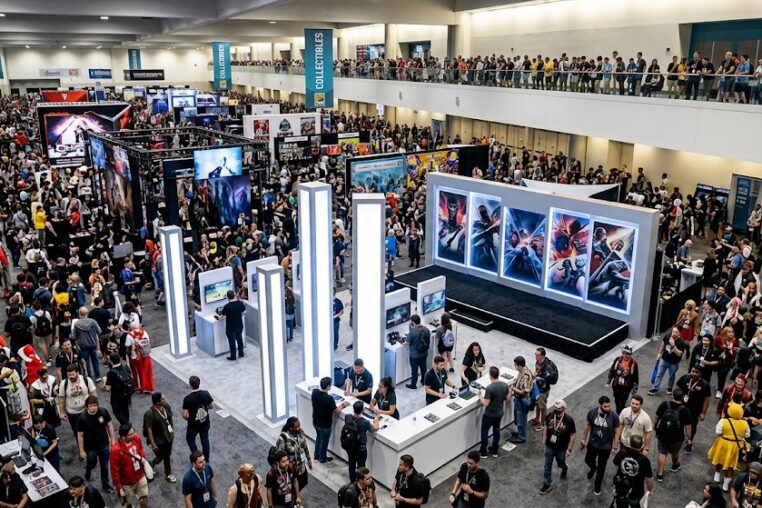
Comic-Con consistently draws one of the largest crowds of any North American convention. The 2024 event reached the venue’s capacity of 135,000 attendees across four show days, with hundreds of exhibitors filling the floor.
The audience skews young and entertainment-focused. According to a YouGov survey on Comic-Con interest, 53% of 18 to 34 year olds expressed interest in attending SDCC, compared to 33% of 35 to 54 year olds and 15% of those 55 and older.
What attendees actually come for breaks down like this:
- Movies: 62%
- Television: 50%
- Video games: 48%
- Celebrity panels: 47%
- Comics and books: 45%
- Merchandise: 42%
- Cosplay: 35%
For exhibitors, the practical takeaway is that the floor will be crowded all four days, especially Friday and Saturday. The audience is primed to engage with brands tied to entertainment, gaming, collectibles, and pop culture, but they are experienced show-goers who walk past anything generic.
Exhibit Hall Space Options
SDCC offers several booth and table configurations, each with different inclusions and target audiences. Per Comic-Con’s official exhibitor information, here is how the main options compare:
| Space Type | Dimensions | What’s Included | Notes |
| Standard Booth | 10’x10′ | Pipe and drape, carpet, electricity, 8′ table, 2 chairs | 4 exhibitor badges |
| Corner Booth | 10’x10′ | Same as standard, two open sides | Premium location |
| Island Booth | 20’x20′ or larger | No furnishings, no carpet, no electricity | Floor plan approval required |
| Dealer or Fan Table | 8′ table | 8′ drape backdrop, 2 chairs, no power | 2 badges |
| Small Press Table | 6′ table | 3′ drape, 2 chairs, no power | Juried, indie publishers only |
| Artists’ Alley Table | Half 8′ table | 3′ drape, 1 chair, no power | Juried selection, 1 badge |
Space sells out almost every year well in advance of the next convention. If you are not already on the exhibitor list for 2026, your fastest paths in are securing space from a partner who already has a booth, applying for Small Press or Artists’ Alley if you qualify, or starting a waitlist application directly with show management.
Badge Allocations and Registration Deadlines
Each exhibitor space includes a baseline number of badges:
- 10’x10′ booth: 4 badges
- Dealer or Fan table: 2 badges
- Small Press table: 2 badges
- Artists’ Alley table: 1 badge
If you need more, additional badges run $725 for full hall access or $383 for public hours only. Most exhibitors underestimate badge needs. A standard 10’x10′ with four badges feels tight once you factor in shift coverage, breaks, and demo staff over four show days.
Key registration deadlines to mark in your project calendar:
- May 7, 2026: Advance badge shipping deadline
- June 16, 2026: Expedited pickup preparation deadline
- July 26, 2026: Final registration close
Missing the May deadline means scrambling for on-site pickup during move-in, which is the worst possible time to be standing in a registration line.
Shipping, Drayage, and Storage
Logistics is where most first-time SDCC exhibitors lose money. The convention center is union-controlled, and all heavy freight moves through the official show contractor. You and your team can hand-carry small items, but the rule is strict: one person, one trip, no dollies or carts.
A few specifics worth understanding:
Drayage costs
Material handling fees through the official show contractor typically run $100 or more per 100 pounds across major US trade shows. For a custom-built booth shipped from across the country, this becomes one of the largest line items on your budget. Add up your booth weight before you commit to shipping plans.
Local storage as an alternative
Out-of-town exhibitors who return year after year often store their booths in San Diego rather than ship cross-country every July. Local warehouse storage plus short-haul delivery to the convention center typically costs significantly less than full long-haul freight plus drayage every year. Over a multi-year exhibiting plan, this can cut logistics costs substantially.
Shipping timeline
- 4 to 6 weeks before show: Confirm booth details, ship materials to storage or freight carrier
- 2 weeks before: Verify all freight has arrived, reserve liftgate trucks for move-in
- Move-in day: Storage partner or carrier delivers crates to the dock during your assigned window
For exhibitors flying in without a fabrication and logistics partner already in place, the freight side alone can absorb dozens of hours of project management.
Union Labor Rules at the San Diego Convention Center
SDCC follows strict union jurisdiction. The rules surprise many first-time exhibitors.
What you and your team can do:
- Unpack merchandise and product samples
- Plug in standard 120V equipment such as laptops, monitors, and lights with wall plugs
- Hand-carry small items in one trip with no wheeled equipment
What requires union labor:
- Booth construction beyond simple one-person assembly
- Any rigging or hanging signs
- Electrical hookups above 120V
- Use of dollies, carts, or forklifts
- Cleaning of booth space
Trying to bypass these rules results in fines, removed equipment, and lost setup time. The labor cost is built into the show’s economics, and the contractor crews are experienced. Your job is to budget for it accurately and brief your installation supervisor on booth specs in advance so the crew can work efficiently when they arrive.
Booth Design Strategy for Comic-Con Crowds
A SDCC booth has to compete for attention against hundreds of other exhibitors and a crowd that moves fast and is easily distracted. The design priorities are different from a typical B2B show.
Vertical visibility
Floor space is precious. Use vertical real estate for branding, hanging signs where rigging is permitted, and tall product displays so your booth is visible from across the hall, not just from the aisle directly in front of you. Through our work on shows of this scale, vertical elements consistently drive more first-time visitors than ground-level signage alone.
Lighting that makes products pop
Convention center overhead lighting is flat and uninspiring. Spotlights on hero products, backlit graphics, and accent LED lighting all help your booth stand out, especially for product photography that attendees share on social media after the fact.
Interactive engagement zones
Static product displays do not perform well at SDCC. Interactive demos, photo opportunities, gameplay stations, and hands-on product trials all draw crowds. Once one person stops to engage, others follow. Build space for groups to gather without blocking aisles.
Limited-edition exclusives
SDCC attendees are collectors. Show-exclusive products, limited-run prints, or convention-only variants drive lines and create buzz on social media. About 66% of Comic-Con fans use social platforms for show news, so promoting exclusives in advance and during the show extends your reach far beyond the booth itself.
Storage and back-of-house
You will need storage for inventory, personal items, and demo equipment. Build this into the booth design rather than improvising on-site with cardboard boxes.
Staffing Your Booth
Comic-Con runs long days, and Saturday is the heaviest traffic day of the show. A few staffing patterns work well:
- Schedule shifts of no more than 4 to 5 hours on the floor
- Have at least one team member available for demos at all times
- Designate a daily lead to handle issues, replacements, or VIP visitors
- Train staff on lead capture process before the show, not on day one
Friendly, energetic engagement matters more than product knowledge for the average attendee interaction. People remember how they were treated, especially in a crowded venue where hundreds of other booths compete for their time.
Have payment systems, badge scanners, and any ID verification processes set up and tested before doors open. Minutes saved on Day 1 compound across the show.
Planning Timeline for SDCC 2026
Working backward from the show, here is a realistic timeline for first-time or returning exhibitors:
| Time Before Show | Action |
| 6+ months out | Confirm booth space, begin booth design |
| 4 to 6 months out | Finalize booth fabrication and graphics |
| 3 months out | Lock in travel and lodging, finalize staffing |
| 2 months out | Submit show paperwork, electrical orders, rigging plans |
| 4 to 6 weeks out | Ship freight to storage or advance warehouse |
| 2 weeks out | Confirm freight arrival, reserve liftgate trucks |
| Move-in days | Booth installation per scheduled window |
Custom booth builds need significantly more lead time than rentals. If you are exhibiting in 2026 and have not confirmed your booth concept by early spring, a custom rental booth is usually the fastest path to a professional, branded presence on the floor.
Frequently Asked Questions
When does San Diego Comic-Con 2026 take place?
Comic-Con 2026 runs Thursday, July 23 through Sunday, July 26, 2026, with Preview Night on Wednesday, July 22. The show takes place at the San Diego Convention Center.
How early should you book your SDCC booth?
Booth space typically sells out the year before, so most returning exhibitors lock in next year’s space during the current show. For 2026, the best chances of securing space are pursuing dealer tables, Small Press, or Artists’ Alley applications, or partnering with an existing exhibitor.
How many badges come with a SDCC booth?
A standard 10’x10′ booth includes 4 exhibitor badges. Dealer and Fan tables include 2 badges, and Artists’ Alley tables include 1. Additional exhibitor badges cost $725 each, while attendee-only badges cost $383.
Do you need union labor at San Diego Comic-Con?
Yes, for most booth construction, rigging, electrical work above 120V, and any use of dollies or carts. Exhibitors can unpack merchandise and plug in standard 120V equipment themselves, but anything beyond that requires the official show contractor’s union crews.
How much does drayage cost at SDCC?
Material handling through the official show contractor typically runs around $100 or more per 100 pounds across major US trade shows. Many returning exhibitors store booths locally in San Diego to avoid repeated cross-country shipping costs.
Plan Your San Diego Comic-Con Presence
Comic-Con rewards exhibitors who plan early, design for crowd visibility, and treat logistics with the same seriousness as the booth itself. The shows where we have seen clients perform best are the ones where the booth, freight, install crew, and staffing all come together as a single coordinated plan rather than a stack of separate vendors.
If you are exhibiting at San Diego Comic-Con 2026 and want a partner that handles design, fabrication, graphics, freight coordination, and on-site installation under one roof, reach out to our team at Xibit Solutions for a free consultation and estimate. We will walk you through what your booth could look like, what it will cost, and exactly how the timeline works for an SDCC build.