
What to Expect When Exhibiting at ASD Market Week 2026
ASD Market Week 2026 runs August 25 to 27 at the Las Vegas Convention Center, with show hours from 9:00 AM to 6:00 PM each day. Exhibitors should expect roughly 30,000 qualified retail buyers from 80+ countries, a newly compressed 3-day schedule, an order-writing atmosphere where buyers come ready to place real wholesale orders, and a unified floor plan across the North and Central Halls. For first-time exhibitors, the biggest adjustments are the pace of the show, the open floor plan that rewards low-profile booth design, and the strict no-early-breakdown policy. At Xibit Solutions, we’ve built and installed booths at major Las Vegas conventions for over 20 years, and ASD has a few quirks worth understanding before move-in week.
This guide covers what the show actually feels like on the floor, who’s walking the aisles, what your booth needs to do to perform well, and the logistics deadlines that catch new exhibitors off guard.
When and Where ASD Market Week 2026 Takes Place
ASD Market Week is held twice each year in Las Vegas, traditionally once in the spring and once in late summer. The summer 2026 edition is scheduled for August 25 through 27, 2026 at the Las Vegas Convention Center, occupying the North and Central Halls under a single unified floor plan.
The show shifted to a 3-day Tuesday-through-Thursday format starting in 2026, down from the previous 5-day schedule. This is a meaningful change. The same volume of business now happens in fewer days, which means a faster pace, tighter staffing windows, and less margin for error if your booth isn’t ready on opening morning.
Here are the show’s headline numbers for 2026:
| Detail | 2026 |
| Dates | August 25 to 27 (Tuesday to Thursday) |
| Hours | 9:00 AM to 6:00 PM daily |
| Venue | Las Vegas Convention Center, North & Central Halls |
| Total exhibitors | 1,800+ vendors |
| Total attendees | ~30,000 qualified buyers |
| Countries represented | 80+ |
| VIP hosted buyers | 500+ |
| Product categories | 19+ |
Who Attends ASD Market Week
ASD pulls one of the broadest retail buyer audiences of any U.S. trade show. The 30,000 attendees include buyers from large national chains (Walmart, Sam’s Club, TJ Maxx, Ace Hardware are regular attendees), independent boutique owners, dollar store buyers, grocery and pharmacy buyers, and a growing share of e-commerce retailers. Roughly 60% of attendees are first-time visitors to ASD, which means a meaningful portion of your prospect pool hasn’t seen anyone’s booth before.
A few attendee characteristics worth planning for:
- About 53% of buyers actively look for private-label or unique products, so brands with new SKUs or proprietary lines tend to draw stronger interest than commodity offerings.
- Buyers come with budgets allocated and decision-making authority, which separates ASD from shows where attendees are mostly researching.
- Over 500 hosted VIP buyers attend each show, including key accounts and buying-group representatives. Exhibitors can nominate their own retail accounts for the VIP program before the show.
- International buyers attend in meaningful numbers, particularly from Latin America and Asia, often through ASD’s affiliated SourceDirect program.
The mix of buyer sizes is something to plan booth staffing around. You may have a Walmart category buyer and an independent gift shop owner walking up within the same 10 minutes, and they need very different conversations.
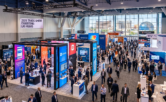
What the Show Floor Experience Is Like
The single most important thing to understand about ASD is that it’s an order-writing show. ASD bills itself as the “#1 order-writing show,” and the show floor backs that up. Buyers walk the aisles with order forms (digital or paper), wholesale terms in mind, and an expectation that they’ll place commitments at the booth.
This shapes everything about how you should staff and design your space:
- Your booth needs a place for buyers to sit down and write an order. A small table, two chairs, a clipboard or tablet. Booths designed purely for brand awareness underperform here.
- Your team needs to be able to pull line sheets, confirm pricing, and process commitments on the spot. If your sales process requires a follow-up call, you’ll lose orders that competitors close on the floor.
- Pricing should be clear, finalized, and ready. Buyers compare offers across the aisle in real time.
One general-merchandise exhibitor, quoted in ASD’s published exhibitor materials, said that 15 to 20% of their annual business comes from orders written at this show. That’s not unusual for vendors with strong booths and the right product fit.
The pace is fast. Aisles are busy from open to close on day one, taper somewhat on day two, and have a final buying push on day three before the show closes.
What Kind of ROI to Expect
Your ROI at ASD depends on three things: product fit, booth location, and pre-show preparation. Product fit is the biggest variable and the one you can’t change at the show. The other two are entirely within your control.
Realistic expectations for a well-prepared first-time exhibitor:
- A well-staffed 10×10 or 10×20 booth can keep your team in active buyer conversations through most of the open hours across the 3 days.
- Order conversion rates vary widely by category, but exhibitors with private-label or unique products tend to convert better than commodity vendors.
- The strongest exhibitors land at least one large account at ASD that pays for the show several times over. The order pipeline from a single chain or buying group can dwarf the rest of your booth activity combined.
It’s worth building an internal benchmark before you go: target lead count, target order volume, and a follow-up plan for anyone who didn’t write at the booth. ASD’s free lead capture in the mobile app makes the data collection part easy. The follow-up discipline is on you.
Booth Preparation and Logistics for ASD 2026
The 3-day format means installation and dismantling windows are tighter than they used to be. A few specifics that catch new exhibitors off guard:
Move-In and Move-Out Schedule
Move-in starts the day before the show opens, with target times assigned by booth location. Freight that arrives outside your target window may sit in queue. The Exhibitor Services Manual (sent via the Exhibitor Dashboard) has the full schedule, and we’d recommend reviewing it as soon as it’s released.
Move-out is the strict part. ASD enforces a no-early-breakdown rule with fines of $500 to $1,000 for violations, plus the risk of losing booth assignment for future shows. Your booth has to stay staffed and intact until the official close on Thursday.
Material Handling and Freight
Freeman serves as ASD’s official general services contractor. All booth services (carpentry, furnishings, electrical, plumbing) are ordered through Freeman Online, and freight is handled through their drayage system.
ASD includes 300 lbs of free material handling per 100 square feet of booth space, which is generous compared to many shows. For a 10×10 booth, that’s 300 lbs of free drayage; for a 10×20, it’s 600 lbs. Plan your freight weights with this in mind. Anything over the included allowance is billed by the hundredweight.
If you’ve never dealt with drayage before, the short version: drayage is the cost of moving your booth materials from the loading dock to your booth space inside the convention hall. It’s a separate line item from shipping, and it’s one of the most commonly underestimated trade show expenses. Our trade show logistics services handle this end-to-end so exhibitors don’t have to coordinate freight, drayage, and on-site material handling separately.
Booth Staffing and Badge Requirements
Each person staffing your booth needs to register for a badge through the Cvent invitation that goes to your designated contract contact (invitations typically start hitting inboxes in early July).
Badge pickup requires two pieces of ID:
- A government-issued photo ID
- A separate piece of business identification (a business card with your name on it, a recent payroll stub, or similar)
Badges are non-transferable, so if you bring an extra team member at the last minute, they need to register, not borrow someone else’s pass.
ASD is trade-only. The general public isn’t admitted, no minors under 16 are allowed on the floor on show days, and strollers aren’t permitted. Vendors selling tobacco or vape products need a special Nevada event tobacco license arranged in advance.
Marketing Tools ASD Provides Exhibitors
One of the genuinely useful things ASD does is bundle a stack of free marketing tools with your exhibitor package. Most exhibitors underuse them. Here’s what’s available and worth taking advantage of:
- Exhibitor Dashboard. The control panel for your company profile, product listings, and logos in the official directory and mobile app. Update this early. Buyers research before they walk the floor.
- Mobile app and lead capture. Free badge scanning during the show. No upcharge.
- Pre-show email and social promotion. ASD selects products from exhibitor submissions to feature in their email campaigns and social media, which reach a network of 250,000+ buyers. Submit your strongest SKUs early.
- On-site product showcases. ASD displays selected products in strategic locations on the show floor with signage pointing back to your booth. This is a free traffic driver if your product gets selected.
- VIP buyer nominations. Nominate your top retail accounts. If they qualify for the hosted buyer program, ASD covers their hotel stay and credits the nomination back to your booth.
- Vendor Preview Guide. A digital pre-show guide sent to attendees with featured products. Worth submitting to.
- ROI calculator. ASD provides a planning tool to estimate breakeven and potential sales based on booth size and costs. Useful for setting internal expectations before the show.
The pattern across all of these: they’re free, they have submission deadlines, and they all reward exhibitors who upload assets and complete profiles early.
Booth Design Considerations for ASD’s Open Floor Plan
ASD uses an open floor plan layout, which means the show floor is laid out without high pipe-and-drape walls between booths. This has design implications that catch first-time exhibitors off guard:
- Tall walls at the front of your booth can block sightlines into neighboring booths, which is generally discouraged and sometimes restricted by show rules. Check your specific booth package for height limits.
- Lighting matters more than usual. The convention hall’s overhead lighting is functional, not flattering. Booths with their own lighting (LED accent fixtures, backlit graphics, hanging fixtures where allowed) read significantly better in photos and from a distance.
- Hanging signs are an effective visibility play if your booth size and package allows them. They’re visible from across the hall and don’t take up floor space.
- A tension fabric backdrop with strong, simple graphics typically outperforms a busy multi-panel backwall on the open floor plan.
For booth size selection, here’s a rough guide based on what we’ve seen work for exhibitors at similar Vegas shows:
| Booth Size | Best For |
| 10×10 (inline) | First-time exhibitors, focused product line, single-conversation booths |
| 10×20 (inline) | Two-conversation booths, more product display, room for a sit-down order-writing area |
| 20×20 (island) | Established brands, multiple SKU lines, demo space, dedicated meeting area |
| 20×30 or larger | Major brands with broad product lines or hospitality areas |
For exhibitors weighing rental versus purchase: if ASD is your primary annual show and your branding and product line are stable, a custom-built booth pays back over 3+ uses. If you’re testing the show or your needs vary across multiple events per year, trade show booth rentals are typically the better fit.
Tips for Getting the Most Out of ASD Market Week 2026
A few things we’ve consistently seen separate exhibitors who walk away with strong orders from those who walk away frustrated:
- Submit marketing assets to ASD’s pre-show programs early. The free promotion is genuinely valuable but has deadlines, and selection is competitive.
- Pre-book meetings with target buyers. Don’t rely entirely on aisle traffic. Reach out to your existing accounts and prospects 4 to 6 weeks before the show with specific meeting times.
- Have order-writing logistics figured out before you arrive. Tablets, line sheets, terms sheets, payment processing if needed. Don’t troubleshoot this on day one.
- Bring more samples than you think you need. Buyers want to touch, hold, and inspect product. A booth with three samples of each SKU underperforms a booth with twenty.
- Staff for the pace. A 10×10 booth with one person on the floor cannot serve buyers during peak hours on day one. Two minimum, three for higher-traffic categories.
- Plan post-show follow-up before the show. Have an email template and CRM workflow ready before you arrive. Lead follow-up speed is one of the biggest determinants of whether show conversations turn into actual orders.
- Book hotels through ASD’s official partner (EvolveCon). Avoid third-party housing scams that target trade show exhibitors with unsolicited offers.
Frequently Asked Questions About ASD Market Week 2026
How much does it cost to exhibit at ASD Market Week?
Booth costs vary by size and location on the floor. ASD doesn’t publish standard pricing publicly, so exhibitors need to request a quote directly through ASD’s sales team. Beyond booth space, budget for booth design and fabrication, freight and drayage, electrical and utilities, travel and lodging, and staff time.
How early should I start planning my ASD Market Week booth?
For a custom-built booth, 4 to 6 months out is a comfortable timeline. For a rental, 6 to 8 weeks is typically workable, though earlier is always better for design refinement. Last-minute rentals are sometimes possible but the available inventory shrinks closer to the show.
Is ASD Market Week worth it for first-time exhibitors?
It can be, depending on your category. ASD performs well for vendors with private-label products, unique SKUs, or strong brand stories. It performs less well for commodity products with thin margins and no differentiation. The 60% first-time-attendee rate also means a lot of the buyer audience is new to ASD, which favors exhibitors with strong booth presence over those relying purely on existing relationships.
Can I break down my booth early on Thursday if I’m flying out?
No. ASD strictly enforces booth staffing through close of show, with $500 to $1,000 fines for early breakdown plus risk of losing booth assignment for future shows. Plan your travel accordingly.
What’s the difference between ASD Market Week and other Las Vegas shows?
ASD is broader in product categories than most Vegas shows (CES is tech, SEMA is automotive, MAGIC is fashion). It’s also more order-writing-focused than shows that emphasize education, networking, or product launches. The buyer mix skews toward retail rather than wholesale distribution.
Planning Your ASD Market Week 2026 Booth
ASD Market Week 2026 has the makings of a strong show for exhibitors who prepare for it the right way. The compressed 3-day format puts more pressure on getting the booth right on day one, and the open floor plan rewards thoughtful booth design over expensive scale.
We’ve worked with brands across nearly every product category at major Las Vegas shows, and our North Las Vegas facility means we can handle design, build, in-house graphics production, freight, and on-site installation under one roof. For ASD specifically, our local presence makes last-minute adjustments and tight install windows easier to manage.
If you’re planning your booth for ASD Market Week 2026 and want to talk through your options, give us a call at (702) 361-7502 or email info@xibitsolutions.com to schedule a free consultation and estimate. You can also browse our booth gallery to see examples of our work across booth types and industries.